Synthetic biology · Research · 2025
PHAsco / iGEM
Engineering biodegradable PHA microbeads as an alternative to the plastic microbeads in cosmetics.
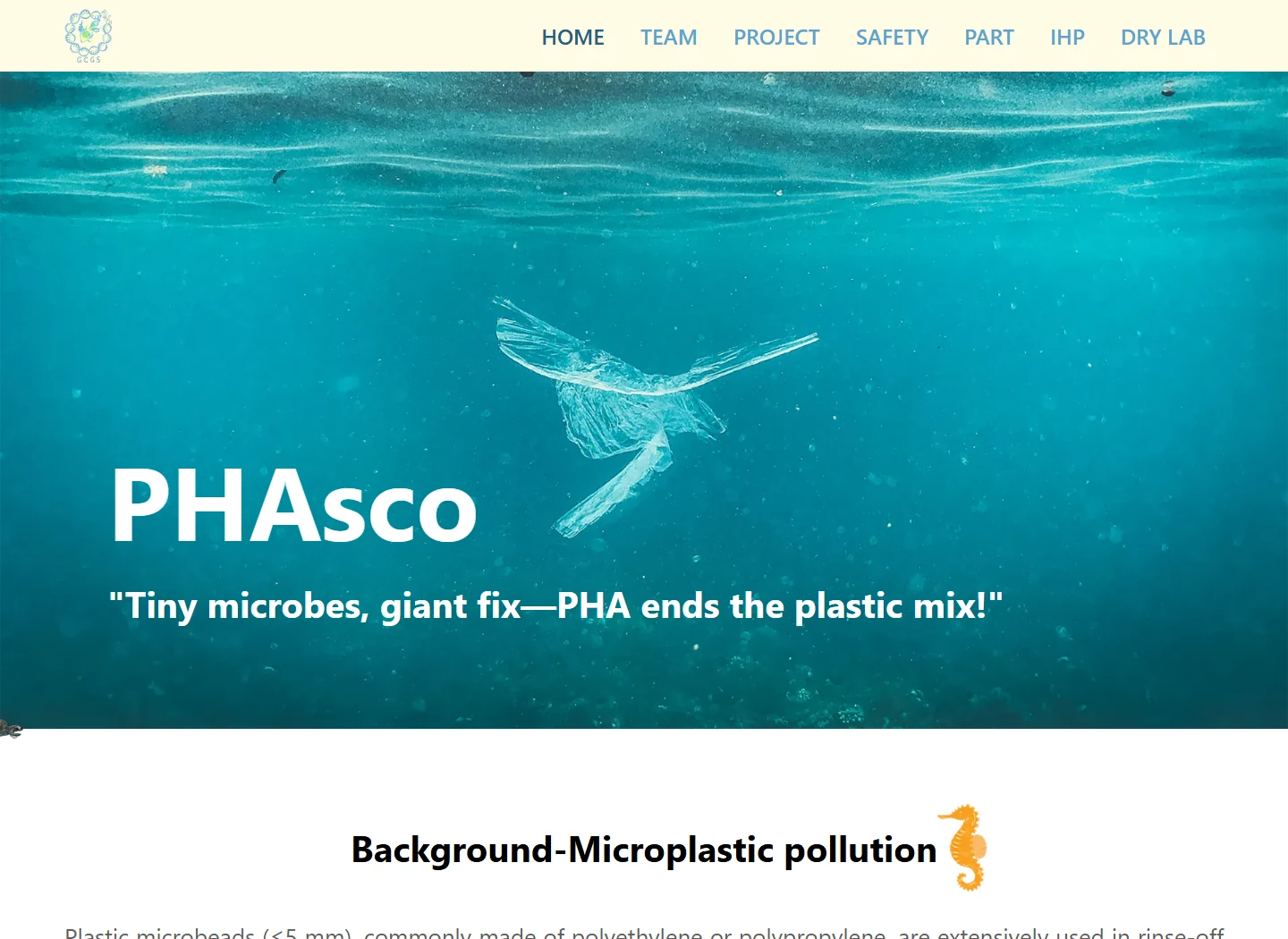
The PHAsco wiki. Read the full project at 2025.igem.wiki/gcgs.
Small plastics, long afterlife.
Plastic microbeads—usually under five millimeters—are added to rinse-off cosmetics as exfoliants. They are small enough to escape wastewater treatment, buoyant enough to travel, and persistent enough to accumulate in waterways.
Once in the water, they adsorb toxins and are ingested by marine organisms. The particles move up the food chain, carrying both plastic and the chemicals attached to it. The problem is not only visible litter; it is a slow, distributed exposure.
PHA microbeads, made by microbes.
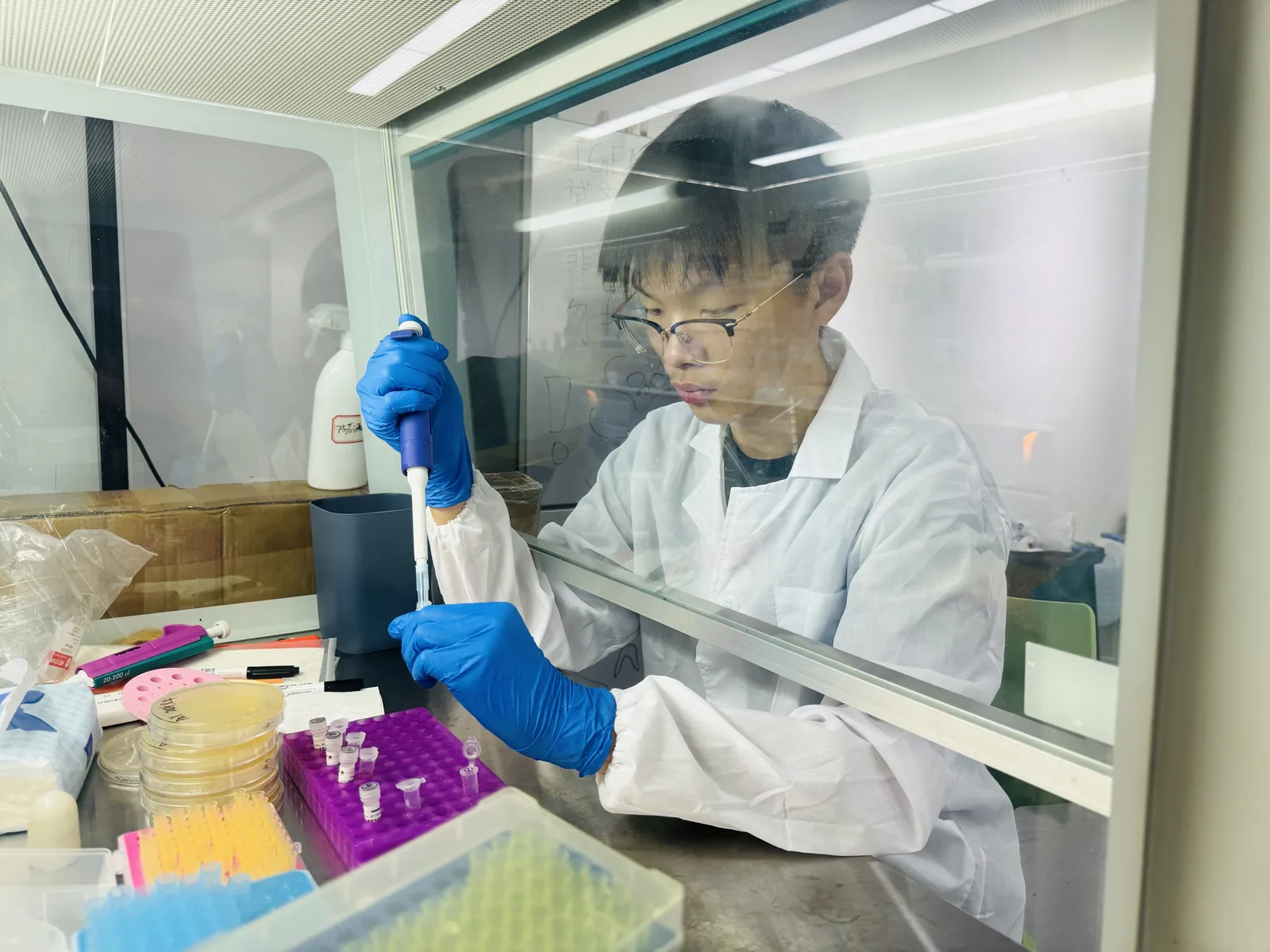
Our team engineered E. coli to produce polyhydroxyalkanoate (PHA) particles as a biodegradable alternative. The system had three parts:
- Core biosynthesis: the phaCAB operon for high-yield PHA synthesis.
- Size regulation: PhaP/ADF3 proteins to control granule uniformity.
- Temporal control: different promoters to separate synthesis and assembly phases.
The goal was not just a proof of concept. We wanted a material that could be tuned, produced, and eventually adopted—so the project also explored the economics, safety, and communication around a replacement material.
Making 22 people into one argument.
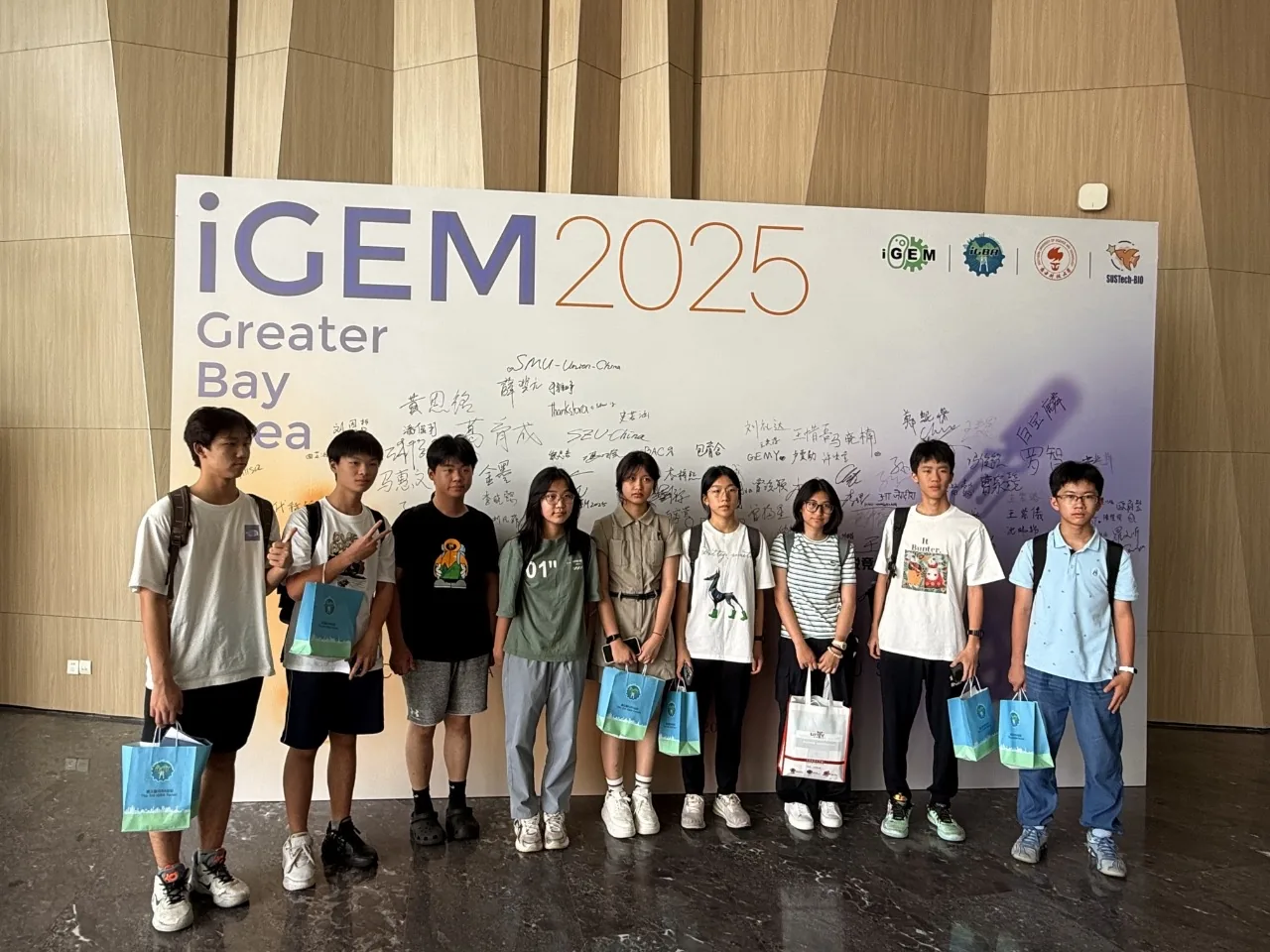
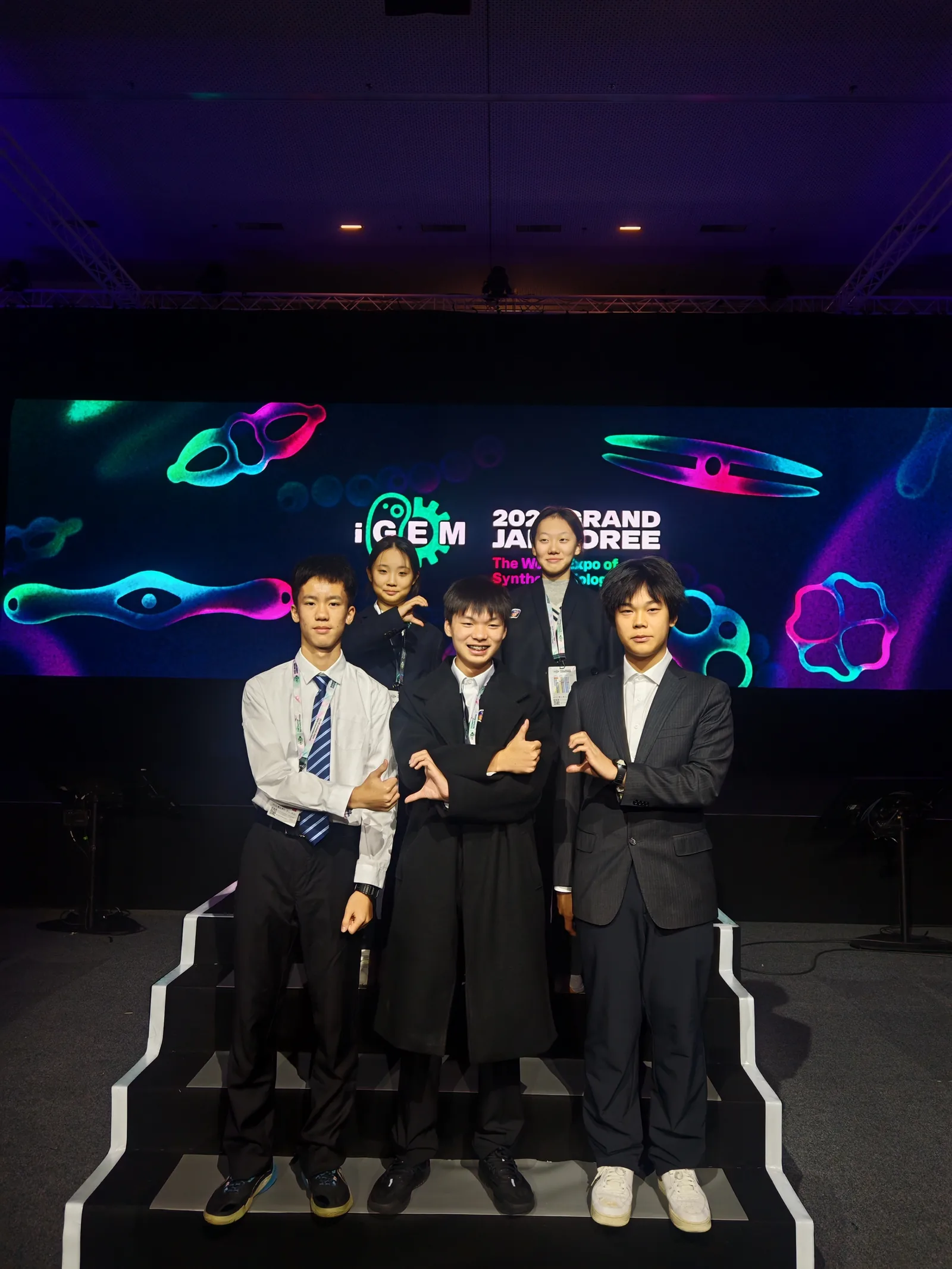
As team leader, I coordinated a 22-person team across wet lab, modeling, human practices, design, and presentation. I ran project management, helped set milestones, and made sure the wiki told a coherent story rather than a pile of separate experiments.
The hardest part was not any single assay. It was keeping the project legible across disciplines—so the lab team knew what the modelers needed, the human-practices team knew what the science could claim, and the final presentation could stand on its own.
A team is a system, too.
The best science I did that year was not at the bench. It was helping people with different expertise make one argument together—and knowing when to let a teammate's idea change the direction of the project.
I left iGEM more interested in the conditions that make good science usable: clear language, shared standards, and a team that can disagree without fragmenting.