Public health · Environment · 2026
YĚXĪ / Green Treasure Map
A Chinese-language field guide to 25 green trails across Guangzhou—built to make a slow walk feel possible.
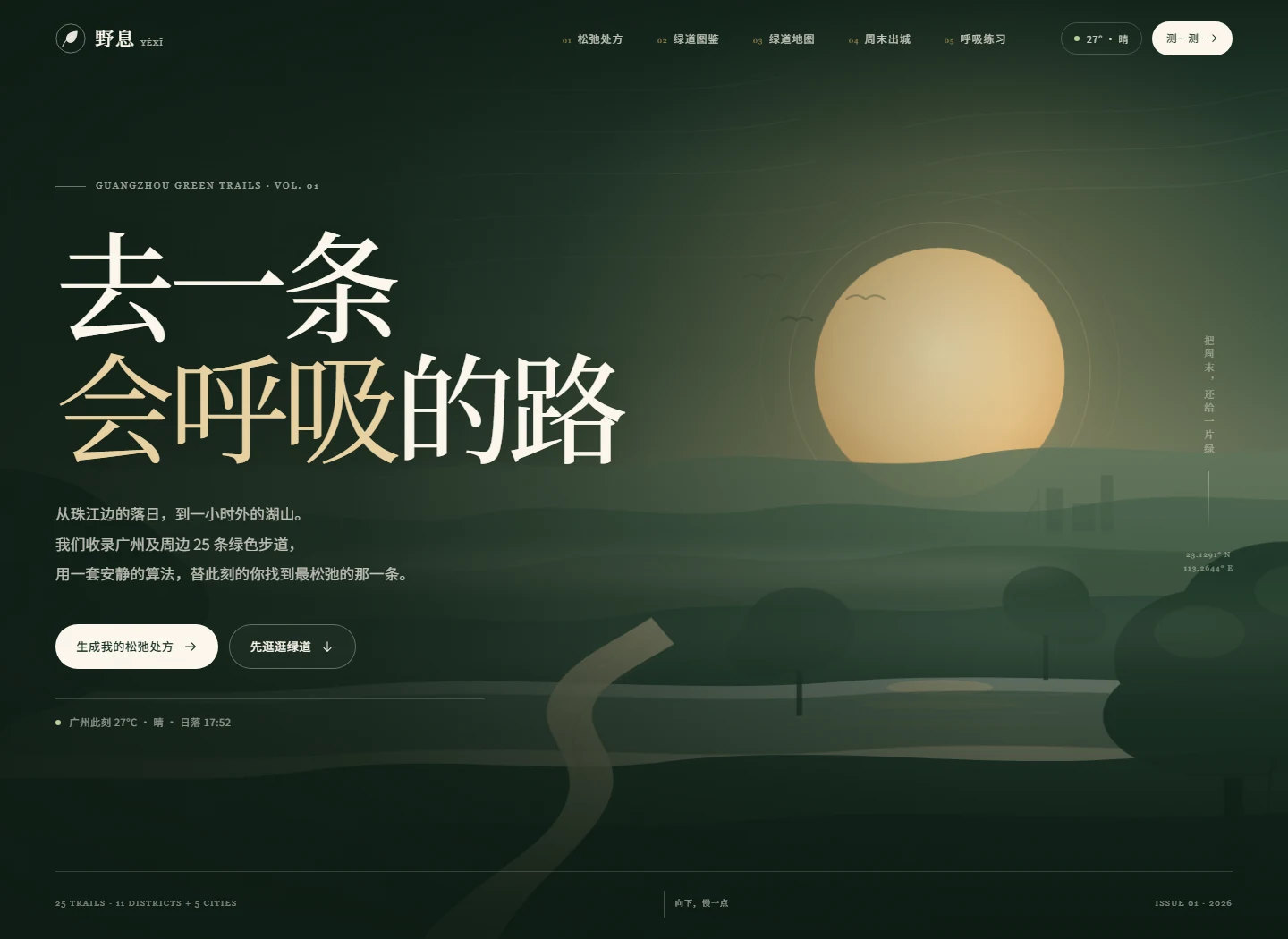
The YĚXĪ homepage. The project is live at yexi-guangzhou.netlify.app.
Green is not the same as accessible.
Guangzhou is full of green. But a park on a map is not the same as a walk that fits your afternoon, your mood, or the weather. Access is shaped by shade, water, crowds, and time—not just distance.
I wanted to build a guide that started with a person's question—“What kind of walk do I need today?”—rather than a list of “must-visit” places.
A guide, a map, and a quiet algorithm.
YĚXĪ is an independent, ad-free, no-tracking field guide. Readers can browse 25 trails across 11 Guangzhou districts and five surrounding cities, or answer six questions about mood, company, time, distance, scene, and arrival.
A weighted model—mood 32%, company 18%, time 16%, distance 12%, scene 10%, arrival 7%, weather 5%—suggests a trail. Live weather from Open-Meteo adjusts the result. All calculation happens in the browser; there is no login and no tracking.
The project also distributed 500+ printed booklets and placed QR maps in local cafés, so the guide could travel beyond the screen.
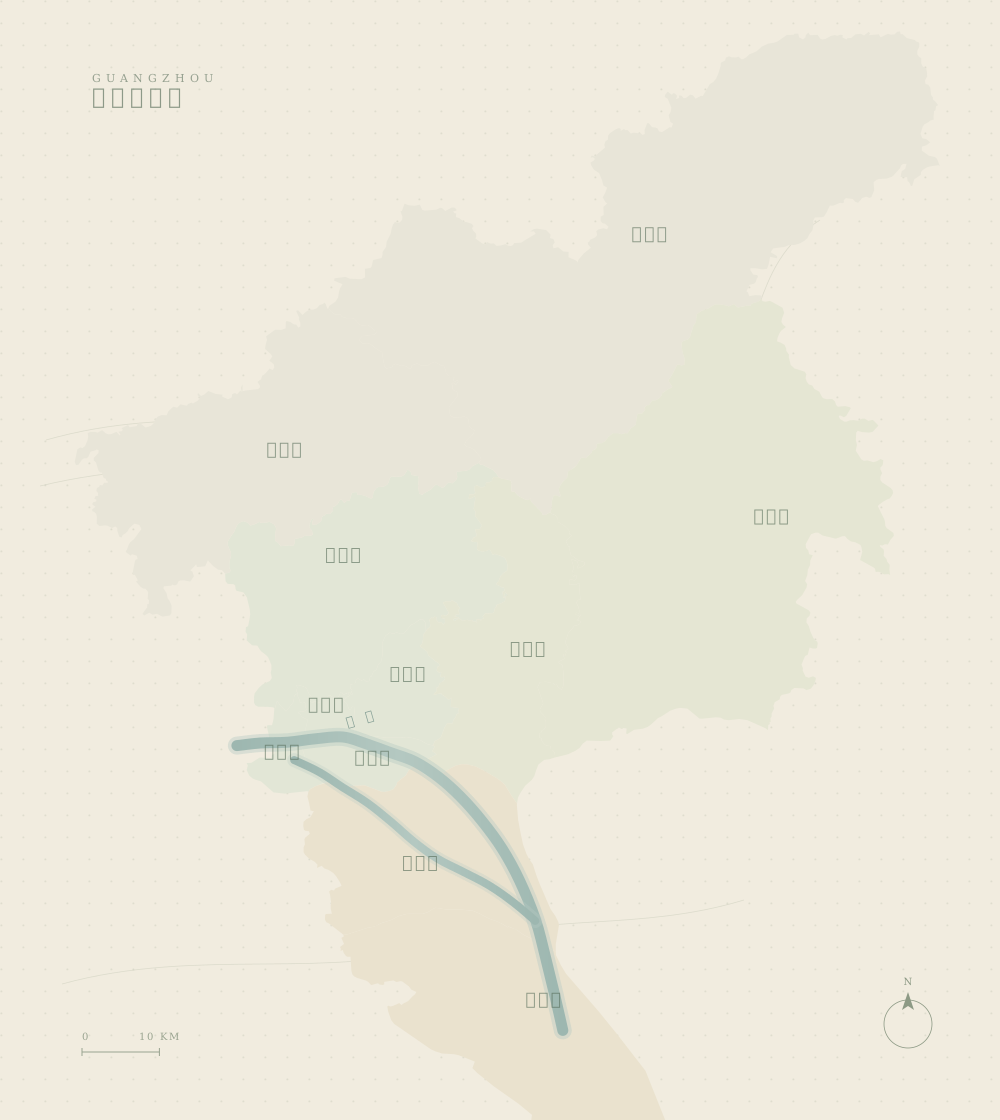
Green space is a public health resource.
The project treats access as a relationship between a person and a place. A trail can be close and still feel unavailable if it is exposed, crowded, or hard to reach. A good recommendation has to hold all of those things at once.
That is the same lesson I keep returning to in health communication: the evidence is only half the work. The other half is the shape of the day, the body, and the life that has to carry it.
A map tells you where to go. A good guide helps you decide whether to go at all.
Translate a feeling, not just a location.
The hardest part was not the map. It was translating a feeling—“I need a slow walk”—into questions a tool could answer without pretending to know too much.
I learned to design for uncertainty: to offer a suggestion, explain the trade-offs, and leave the final decision with the person. That feels like the right role for a public health tool.